Monday, December 3, 2018

Why I Wouldn’t Use 3D (NGSS) Performance Expectations for Standards-Based Grading (Part 3 of Series)


In my last post, I mentioned that I would not use the NGSS Performance Expectations (PEs) as scoring categories for standards-based grading (SBG). The main concern I expressed was about the inconsistencies and confusion that generated in one district that tried it. Teachers did not agree on—or, in some cases, even understand—what the PEs meant. I wanted to share a few more thoughts on why not to use the PEs in SBG, and in my next post go into some depth on an alternative idea for SBG.

Here’s what using PEs might look like for grading categories in a first grade classroom, though other elementary grades would be similar. Middle and high school would tend to have 4-6 PEs per quarter. To create this table I used the topic progression of the NGSS to determine the PEs of each quarter.

1st Quarter
2nd Quarter
3rd Quarter
4th Quarter
·   Use materials to design a solution to a human problem by mimicking how plants and/or animals use their external parts to help them survive, grow, and meet their needs.

·   Read texts and use media to determine patterns in behavior of parents and offspring that help offspring survive.

·   Make observations to construct an evidence-based account that young plants and animals are like, but not exactly like, their parents.
·   Plan and conduct investigations to provide evidence that vibrating materials can make sound and that sound can make materials vibrate. 

·   Make observations to construct an evidence-based account that objects in darkness can be seen only when illuminated.

·   Plan and conduct investigations to determine the effect of placing objects made with different materials in the path of a beam of light. 

·   Use tools and materials to design and build a device that uses light or sound to solve the problem of communicating over a distance.

·  Use observations of the sun, moon, and stars to describe patterns that can be predicted.

· Make observations at different times of year to relate the amount of daylight to the time of year.

·   Ask questions, make observations, and gather information about a situation people want to change to define a simple problem that can be solved through the development of a new or improved object or tool.

·  Develop a simple sketch, drawing, or physical model to illustrate how the shape of an object helps it function as needed to solve a given problem.

·  Analyze data from tests of two objects designed to solve the same problem to compare the strengths and weaknesses of how each performs.

The first reason I would not go with PEs as categories is that I would want my categories to represent a clearer progression of learning through the course of a year. Using PEs might encourage a focus on isolated content and skill work rather than true integration. Specifically, practices and crosscutting concepts don’t have a clear progression through this year. Patterns and making observations come up four and five times respectively, but most are once or twice. If an educator’s main goal was getting students to make observations and notice patterns, that strategy could work but would need to be explicitly spelled out.

Another reason to hesitate on PEs: I’ve been told that PEs were designed as goals to be mastered by the end of the year, not the end of the first or second quarter. If I want students to progress in data and pattern analysis, for example, it’s going to be hard to see sufficient progress in one quarter. It will be much more meaningful through a year.

Perhaps a larger PE-related issue that I have seen happening in Wisconsin is treating them as checkboxes. Educators do a lesson or two related each PE and consider that sufficient. Many instructional materials are coming out that seem to take this approach. That does not help support coherent learning, but instead encourages frenetic activity doing.

Next, what about this engineering approach? I often see engineering being done in an isolated unit. Some new materials have a unit on the “engineering design process” just like they used to have (or continue to have) units on the “scientific method.” Engineering in these standards is meant to deepen and extend science learning. The Framework and NGSS intentionally note that we’re not creating standards for a separate engineering course but connecting to science.

I would also argue that it’s worth more specifically knowing and sharing where students are struggling – is it figuring out patterns, is it making effective observations, or is it the student hanging on to the idea that given enough time they’d be able to see that object even in complete darkness? Further, with a likely desire to link categories to math and literacy standards at the elementary level, those connections become more muddled within these 3D targets. In other words, a 3D rubric would be harder (though not impossible) to tease apart for connections to math and literacy standards.

To be more specific, let’s look at PE 1-ESS1-2. Twice a month, as part of a morning calendar routine that links to mathematics, students note the sunrise and sunset times and estimate the amount of daylight. At the end of the year, they take a 30 minute science class to look at this data by month and students individually make observations of patterns in a structured (i.e. scaffolded) way in their notebook. The teacher can then assess it and say the standard is done. Check! Is that what’s intended with these standards?

What ideas do you have for standards-based grading? Anyone want to advocate for the PEs in SBG or offer additional reasons not to use them?

Friday, September 7, 2018

How Are Some Districts Connecting Standards-Based Grading to NGSS/WSS? (Part 2 of series)

I have yet to find or figure out a standards-based grading (SBG) system that I feel fully aligns to the intent of the NGSS (or, by extension, the Wisconsin Standards for Science - WSS). That being said, several districts across Wisconsin are thoughtfully working to make this connection, and they deserve recognition for the effort. I am going to share the basics of four systems and some positive attributes of each. Unfortunately, I do not know the full implementation story of these districts, so I focus more on the end product. In each case it has been a multi-year process, with further fine-tuning typically still underway (so the documents linked below might not be their final versions). In the next post, I’ll share some ideas on how I would structure an SBG system a bit differently than the four examples below.

Example 1 - Waukesha

In the School District of Waukesha, they have emphasized “Grading for Learning” for several years, which focuses on clear student learning targets and feedback/support cycles to help students accomplish those targets. In science, they have three main learning targets, with additional sub-skills, in grades 6-12 for science:

  • Learning Target (LT) 1 - Students will demonstrate effective communication skills in science through reading, writing, discussions and oral presentations.
  • LT 2 - Students will develop and apply the skills of inquiry, data analysis, scientific investigations, and evaluation of models.
  • LT 3 - Students will demonstrate their knowledge of scientific concepts, principles and core ideas.
Generally, the first target relates to evidence-based explanations and literacy skills within science. The second target connects to several science and engineering practices, with clear mathematical connections. The final target focuses on content (disciplinary core ideas). The scores from 0 (no evidence) to 4 (advanced) are translated into letter grades as part of entering them into the Infinite Campus system (as discussed in this overview document). It’s notable that their system aims to connect to literacy and mathematics learning while focusing on meaningful science practices.

Example 2 - Poynette

The School District of Poynette has a focus and set-up similar to that of Waukesha, with grading for learning as a framework for their approach. – https://www.poynette.k12.wi.us/parents/sbg_parents.cfm. Their rubrics for each subject area look similar to Waukesha’s. The following list notes the science rubric categories for each of their grade bands, calling out the progression they have. The titles link to the full rubric for those grades.

Grades 1-3
1. Demonstrates understanding of science concepts.

2. Collects, interprets, and applies data.
3. Supports conclusions with logical arguments. 


Grades 4-5 1. Demonstrates understanding of science concepts.
2. Collects, interprets, and applies data.
3. Supports conclusions with logical arguments. 


1. Explains the structure and function of systems.
2. Clarifies and organizes complex ideas and information.
3. Evaluates hypotheses and data and draws conclusions based on evidence
4. Analyzes and interprets science-related text. 

Grades 9-12
1. Explains the structure and function of systems.
2. Uses mathematics to support explanations and draw conclusions.
3. Applies scientific knowledge to investigate how humans impact environmental/ global systems.
4. Clarifies and organizes complex ideas and information.
5. Evaluates hypotheses and data and draws conclusions based on evidence.
6. Analyzes and interprets scientific text.

Like Waukesha, Poynette has clear connections to literacy and mathematics, particularly seen in the elementary focus on data and supporting conclusions. The literacy elements are also seen in the 6-12 standards on clarifying and organizing information, and analyzing and interpreting text. Their focus on structure and function in systems in grades 6-12 connects to important crosscutting concepts.

Example 3 - Whitnall

The Whitnall School District has taken a different approach than Waukesha or Poynette. As seen in their overview of standards-based report card categories (science on p. 4), there has not been as direct an emphasis on connections across subject areas. Instead, they have aimed to connect to more explicitly to the dimensions of the NGSS (or WSS). Their reporting categories are:

  • Disciplinary Core Ideas: The student demonstrates knowledge of the grade-level science content.
  • Crosscutting Concepts: The student can apply scientific knowledge to situations using key scientific concepts.​
  • Science and Engineering Practices: The student performs the skills ​in which scientists and engineers engage.
Their work to date has been instituted in K-8, with 9-12 in progress, though they plan to have the same reporting categories for science from K-12. They have created a few resources for parents to explain their work, including a one-pager on moving from points to proficiencies and a one-pager on interpreting standards-based scoring and how those scores are different from letter grades. In this presentation they detail their work across grade bands and describe some initial rubric development. They acknowledge that having strong rubrics will be a critical piece of their work.

Example 4 - Marshall

The Marshall School District also has a different take on standards-based grading. Their work is being done K-12. The high school teachers spearheaded how to structure the science SBG, and middle school now uses similar rubrics. Marshall teachers decided to focus on the science practices (and not the engineering specific aspects of those practices). They narrowed the eight practices within the NGSS down to six categories for reporting:

  • Questioning
  • Investigating
  • Modeling
  • Analyzing and Interpreting Data (which builds in mathematical and computational thinking)
  • Constructing and Supporting Explanations (which builds in engaging in argument from evidence)
  • Evaluating and Communicating Information
These six standards became the common foundation for their high school science classes. They decided to add a seventh standard, disciplinary core ideas, to each subject as well. In the following links you’ll see their common rubrics for the six practice categories. You’ll also see subject-specific rubrics for their unique disciplinary core ideas.
They created their rubrics primarily using Appendix F of the NGSS to tease out a progression of skills within each practice, and using Appendix E of the NGSS to tease out a content understanding progression for the disciplinary core ideas. They have found that having students grade their peers with these standards benefits their learning and progress tremendously, which has required ensuring student-friendly language in the rubrics and supporting materials. Additionally, having administrator support has been critical to begin SBG in other content areas and communicate the work to parents.

Final Thoughts

Considering the work across these districts and others embarking on this journey, I have a few words of caution:
  • Fewer targets are better – It’s not realistic to grade 120 students in relation to 10 standards every quarter. Four or five per quarter seems more reasonable. A semester grade might have eight to ten categories (combining the two quarters).
  • A clear understanding of targets is critical – Teachers need the professional learning to understand the targets VERY well. One Wisconsin district decided to use the NGSS Performance Expectations as their targets, split up into units in each quarter. While I see several issues with this approach, the biggest one for this district was an inconsistent understanding of what these targets meant and what three-dimensional instruction looked like to meet these targets.
  • Rubrics need to be true progression – I see a lot of generic rubrics in SBG that are tweaked a little for different subject areas (or not tweaked in some instances). Take a look at my past post on rubric problems! Rubrics need to clue students into exactly what they need to learn and where they’re at in their progress.
  • Part of a strategic assessment system – implementing standards-based grading can’t be separated from a larger emphasis on systems of assessment with significant associated professional learning. If teachers don’t know how to conduct 3D formative and summative assessments, they’re not going to be building up effective evidence toward quality SBG targets. See this year in assessment overview for a HS physical science class for some ideas on how that might work out.
Is your school or district doing standards-based grading? Please, share a link to your work in the comments below!

Why Do Standards-Based Grading? (Part 1 of series)


When I taught eighth grade in California, our administration started talking about implementing standards-based grading. I was skeptical to say the least! I could not imagine how I would manage that type of scoring for 120+ students. I moved away from those initial conversations when I came to Wisconsin to start a graduate program, and I did not find out how things progressed.

Within my graduate program, I began to see the potential of standards-based grading, but I worked in a district that made me realize the process had to be done very carefully. My Wisconsin district had “standards-based” grading. We provided students a score for assessments or assignments within four main standards categories. At the beginning of each quarter I selected two of these categories from a content standards list and two from a list of inquiry skills. When I entered student work into the computer program, I gave it a score of 0 to 4 (with 0.5 demarcation okay) on one or more of these standards. I received no formal training on how to grade students based on this system; I talked informally to other teachers about the logistics and their philosophy on what to do. On report cards, students received both a numerical score in each sub-category and an overall letter grade. I struggled with the idea that a 3, “proficient,” would be turned into a B+ on report cards—I felt that “proficient” should be an A, so I fudged that a bit. Neither the school, the district, nor the eighth grade team had rubrics to clearly delineate what each score meant.

Fortunately, work in that district did not sour me on the process. I continued having conversations with other educators and doing further research. I found several reasons to put forth the effort to do standards-based grading well:
  1. Mindset - Jo Boaler’s practical interpretation of CarolDweck’s Mindset work blew my mind a few years ago. Using letter grades gives students the message that they are an A, B, C, D, or F student. It instills “fixed” beliefs rather a sense that they can get it if they keep working. Supporting a growth mindset has huge implications for student success in school and life.
  2. Engagement and Empowerment – when students see a clear path of learning, and where they fall along that path, they feel empowered to direct their learning. It’s in their hands and personalized to their needs. They become more active learners when their progress is not repeatedly stopped by a letter (therefore, redos also become important).
  3. Feedback – providing clear feedback to students on their work is oneof the most effective instructional strategies at our disposal. Giving a B or an 84% tells students little or nothing about their learning; it tells them about the type of person that they are. I’m pretty sure you’ve heard adults say, “I was a ‘C’ student.” On the other hand, standards-based grading, assuming there are well-articulated and properly used rubrics, provides a means to give relevant and actionable feedback to students. It tells them their effort can result in further learning and acknowledgment of that learning. A colleague once described formative feedback as a mentor and mentee relationship, and I’ve learned more from mentors than through any other means.
  4. Parents and Community – standards-based grading is not an easy sell to parents or communities, but we can certainly communicate it better. Colleges decry the need for remedial classes. Parents do not know how to help their child succeed. Business leaders say that graduates do not have the necessary life/job skills. Having real data about what students can and cannot do helps to address these challenges.
Currently, with new science standards in Wisconsin, local education agencies have the opportunity to rethink a lot about their system. After a long personal journey, I now encourage educators to explore standards-based grading as part of their five-or-so-year process of evaluating and redesigning their science programs. I do warn them, however, that it has to be done carefully, and that it will not be an easy process.

Here are some questions to collaboratively dig into if you are considering or beginning the standards-based grading journey:
  • Why are you doing it? How does it connect to your vision of student learning? A clear, concise rationale will be critical in discussions and communications.
  • Which standards will we prioritize and why? Standards in any subject tend to be too extensive to meaningfully assess them all. Four to six standards per quarter are probably manageable.
  • How are we connecting with the three dimensions of the Wisconsin Standards for Science (or NGSS or other Framework-based standards)? 
  • What does our 3-5 year learning and roll-out process look like? Will it be a PK-12 system? A transition plan will be important. High school generally requires further considerations in this planning, particularly due to college entrance requirements and GPA (though having a traditional GPA is often flexible).
Part 2 will share some examples of SBG efforts in progress in Wisconsin...

Friday, November 3, 2017

Creating NGSS-Aligned Performance Tasks – Part 2: An Example


As noted in the previous post, performance tasks provide a means to more authentically assess students’ ability to think and work like scientists (3D learning in NGSS parlance). Ideally, students shouldn’t feel like they’re “taking a test.” Authentic assessment allows them to show their learning in a meaningful context that’s part of the flow of daily instruction—it’s not a “drop everything and test” approach.

In this case, I’m going to imagine I was back teaching fifth graders and doing a physical science unit to support students in understanding properties and changes of matter (5-PS1). Below is my thinking as I designed a task, using the steps noted in the previous post on designing performance tasks.

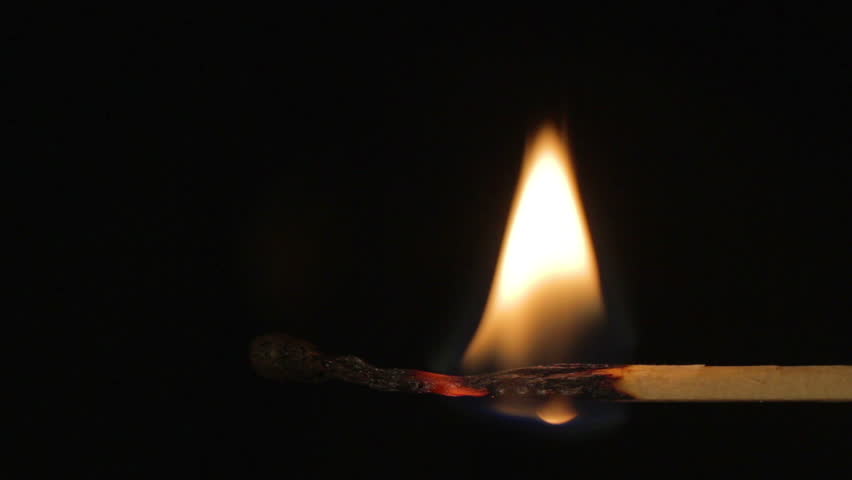
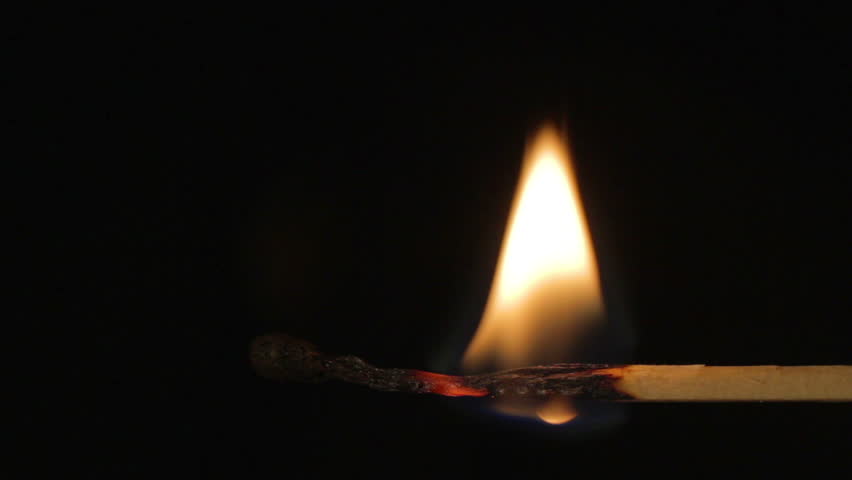
1)   Determine a phenomenon – With an overarching question in this unit of, “How do substances change under different conditions?,” I look for an engaging phenomenon for students to investigate related to this learning. I decide on having them observe and investigate a burning match (with the added benefit of supporting students in proper fire safety!). Criteria for evaluating phenomena from NSTA could help in choosing a phenomenon. I see the burning match as engaging to students, something they’ve likely experienced (or can experience in class), easily connected to the intended standards, and containing a bit of mystery as to what exactly is going on.

2)   Work with practices – I next decide how and whether this phenomenon can connect to the science practices I feel will bring this learning alive for students. Ideally, I’d like to engage them in practices where I know they struggle, so I can have another data point in their progress. Modeling fits the bill on both fronts. Based on ideas from Appendix F of the NGSS within the 3-5 grade band, I’ve already had students doing collaborative modeling and using models we’ve created (or I’ve provided) to support explanations. I decide to have them try to individually develop their own models here to describe this phenomena; that’s also a sub-skill noted in Appendix F. That means students will need some extra guidance on not getting help from others (yet), so I can get a better sense of where they’re at individually. 

3)   Form a learning target – In conjunction with thinking about practices, I dig further into the disciplinary core ideas (DCIs) and performance expectations (PEs) to flesh out a learning target for this assessment task. I see this work as building toward PEs 5-PS1 through 5-PS4. I also see links to the PS1.A and B DCIs: matter is made of particles too small to be seen, the amount of matter is conserved when it changes form, and when substances are mixed a new substance may be formed. Within this focus, I can also see that students will be most explicitly working with the crosscutting concept of matter and energy, though others could also fit such as patterns and scale). My learning target would thus become, “Students create a model to help explain what happens at the particle level when a match burns.” I want them to be able to zoom in to show that we start with a mix of air and match particles, then end up with different particles: smoke, ash, and water (though noticing the water won’t be critical here). I want them to also use that model to help describe that properties (such as color, texture, and weight) have changed—realizing that some of that weight literally went up in smoke. Because I’m also going to try to see whether students can describe conservation of matter during this change, there’s also a formative assessment of finding weight (mass vs. weight is not differentiated at this grade), although conservation of matter is more of a secondary aspect of the learning target that we’ll work more with after this assessment.

4)   Flesh out the scenario – As a class we’d discuss what substances they’re starting with–the match and the air around it (I want them to consider the air, though I don’t think it’s necessary they come up with that on their own here), and what properties to consider. I’d lead them toward weight if it didn’t come up, being open to others as well. Students then individually find the weight of the match and make further observations of it (another formative assessment). With teacher support as needed, they light the match and let it burn on a safe surface, making further observations, including touching it once it’s cooled off if they choose.

Thinking about questions for them during this process, I look to the Research andPractice NGSS Task Formats [link] and the modeling components of Appendix F for ideas. I decide to provide this instruction: “Draw a model (picture) of the match before and after it burns that helps explain what the particles are doing in the match and around the match.” I also look at CCCs for question ideas and decide to ask, “How did you show things in your model that are too small to see?” and “How does your model show the same amount of matter there at the beginning and end?” In this unit, students would have previously worked with models of particles and models of particles in matter that’s undergoing changes.

5)   Create a vision of proficiency – While there are several skills and content pieces going on here, I specifically want a straightforward rubric focused on my key learning target of students being able to create a model that helps explain the particle nature of matter and that a change has taken place. At this point, I would create and use a rubric, however, only if I had a clear sense of expected elements of students’ proficiency. If I didn’t have a sense of how to lay out this topic, skill, or way of thinking in a progression, I would instead work with Facets of Students Understanding to gather and organize their work into categories showing what they can do/understand at this point. These categories could later be tailor made into a rubric showing a progression of their abilities and understanding.

In this case, I’m planning use of a rubric. At a more advanced level, I’m looking for students showing conservation of matter in their models (the frame of the crosscutting concept); that’s something that I expect them to collaboratively begin to be able to describe, but I see it as a more advanced skill at this time at the individual level. Below is an image of what that rubric might look like. Here’s a word file of this rubric [link] and a pdf. To create the rubric I used Appendix F and the evidence statements of the NGSS, following principles described in a previous post.

Main Target
1
2
3
4
Students create a model to help explain what’s happening at the particle level when a match burns.


Student creates a model that shows visible objects (the match before and after in this case). 

He/she provides some observations of these objects, such as the match before and after it burns.
Student shows a connection between visible matter and particles too small as part of their model.

Through before and after models, student shows that a change has taken place in this phenomenon.
Student creates a model that shows and describes visible objects (the match) and particles too small to be seen in the air and the match.

Student’s model describes and shows that the particles before and after are different, because we have new substances (e.g., ash and smoke).

With scaffolding, students is able to describe how there’s the same amount of stuff before and after within this phenomenon.

Student’s series of models clearly describes visible and particle-level changes, providing evidence that a chemical change has taken place.

Student describes through the model how the amount of stuff is the same before and after, even though the detailed weight measurement suggests it’s less.


6)   Reflect – I would walk around with a rubric in hand writing students’ names on it, noting where students are at and adding relevant notes about any other elements of their understanding. I’d reflect on results to determine how to best structure our next investigation(s) and who might need further scaffolding, mentoring, or other support within those investigations to build understanding of these topics and skills of modeling. I’d also gain a sense of where we’re at as a class overall. Note: I wouldn’t be grading students, and they wouldn’t be grading each other! That’s not what formative assessment is about.

To more directly support students’ learning, I’d have them share models with a partner. Students would each share their model, talking about its components and what it means. They would then take turns discussing one another’s models/thinking in relation to the rubric. As a class we would share a few models with important learning elements, and I’d provide students time to revise their models based on that learning. We’d also revisit these models at the end of the unit, enhancing them with further learning.


Tuesday, March 21, 2017

Creating NGSS-Aligned Performance Tasks – Part 1

Whether you’re at the end of the unit or want to check for understanding earlier, performance tasks provide a way to gauge students’ abilities to engage in scientific thinking and use their content knowledge. It’s difficult to truly determine their depth of understanding of a concept or their ability to create scientific models and explanations through multiple choice or brief-response questions. As seen in the image to the right, people training to be astronauts don’t just answer multiple-choice questions! Performance tasks have the potential to provide more meaningful information to guide instruction and to frame feedback for students. But how do you create high-quality, NGSS-aligned tasks? Here’s one idea for a process to do so, and my next blog post will detail an example of going through this process.
  1. Determine a phenomenon – considering the current unit, what relevant phenomenon would make students go “hmmmm”? One new resource I found that includes some fabulous phenomena comes from the California Academy of Sciences, called BioGraphic. Generally, phenomena don’t need to be earth-shattering ideas. I like having an interesting question to guide a unit, then connect that to large- and/or small-scale experiences and engaging stories. For example, that could be declining bat populations or dropping a bowling ball and a feather in a vacuum. A task with your selected phenomenon as a context could frame a performance task at the beginning, middle, or end of the unit. 

  2. Work with practices – After determining a relevant phenomenon, I consider which science and engineering practice (SEP) would bring it to life and which SEP my students need more work with. It would be great if I was collaboratively working on a particular SEP with my department, making that a natural choice. Considering practices, I would not try to assess a practice as a whole, such as analyzing and interpreting data. It’s more useful to focus on a particular subskill in order to design the task, clearly determine students’ abilities, and provide specific feedback. Handy ideas for subskills can be found within Appendix F, the progression of SEPs, and the NGSS Evidence Statements, which break down each performance expectation by subskills of each practice. 

  3. Form a learning target – My primary learning target would be having students use a subskill of a science practice to work with a specific disciplinary core idea (DCI). To achieve three-dimensionality, a crosscutting concept (CCC) might be an implicit part of this learning target. Once I start framing learning targets that are three-dimensional, I start stuttering in the process of rubric creation (as noted in the last blog post). Instead, I often use two learning targets: one that connects practice and content and a second that connects content and big ideas (CCCs).

  4. Flesh out the scenario – With the goals and context of the task in mind, I begin to craft the story and related questions. Which part of the story are students exploring in this task? How does it fit into the overall storyline of the unit. My task might begin a unit, such as engaging students in data that describe concentrations of various chemicals in a nearby lake over the past 50 years. Students would go on to explore ecosystems, water chemistry, and human impacts. Crosscutting concepts are a wonderful resource for creating questions for the task, as each can be transformed into an authentic scientific question. For example, “What is the scale of the agricultural runoff problem?” Or, “What are the important inputs and outputs to consider in the sturgeons’ ecosystem?” This could be an opportunity for students to ask their own questions. Another great resource for framing questions based on the practices is the NGSS Task Formats from the Research + Practice Collaboratory. It provides a series of question templates that can be adapted to wide-ranging contexts. In the end, you’ll want to consider whether the question or series of questions in the task will be moving them further toward expertise in relation to performance expectations (PEs)—not that you’d have a goal of checking off proficiency in relation to PEs, more that you’d consider building student progress toward them through multiple authentic tasks. 

  5. Create a vision of proficiency – I outline my main ideas on proficiency in my previous blog post on rubrics. For proficiency with explanations, I also like the “What, How, Why” rubric by Thompson et al.. Notably, expectations for proficiency may start out a bit vague – having sample student work will help clarify what proficiency looks like, and further rubrics will improve over time. It’s a process! Also, I believe that teachers should reflect on whether or not these individual pieces of proficiency will add up to an assessment of your overall vision for students’ learning in science. Additionally, it’s important to consider whether you want individual proficiency or if you can glean important information to guide instruction from group work. Or, can students’ self- and peer-assessment provide the critical learning at this point? Rubrics or other proficiency guidance should be accessible to students. 

  6. Reflect – Both students and teachers should take time to reflect on the task. Teachers would reflect on evidence of student learning and how the task performed. Did it provide the information wanted in relation to the practice and content? Was it clear to students? Students should receive feedback sufficient to understand where they’re at in their learning in relationship to the goals put forth. That reflection can be supported by personal, peer, or teacher feedback. A key question with all assessment is: How are you giving feedback to students and how are they acting on that feedback? Honestly, I wouldn’t do in-depth reflection with every task; that could quickly become overwhelming. I’d recommend at least once per unit, with a range of practices throughout the year. Teachers will need at least a few common tasks and rubrics to use collaboratively through the year and discuss. 
As noted above, my next blog post will provide an example of going through this process to create a performance task.

Image courtesy of NASA: https://www.nasa.gov/feature/simulators-give-astronauts-glimpse-of-future-flights

Monday, August 22, 2016

Creating Rubrics for Performance Tasks Aligned to NGSS – Part 2

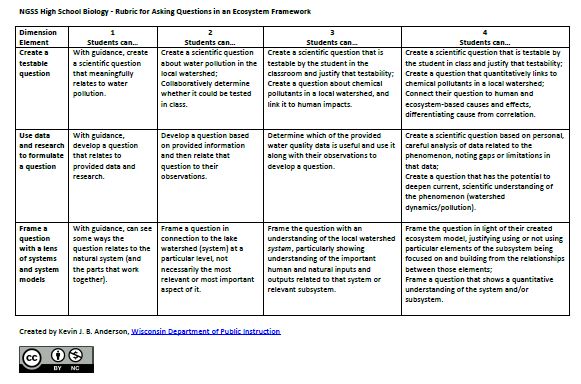
I created the three-dimensional rubric below in an attempt to help get the ball rolling. I have honestly not yet seen a rubric where the creator claims it is three-dimensional. I’m not sure I’m there yet, so critique away! Most rubrics I’ve found only focus on the practices, which I agree is a good place to start (see the resource list at the end of this post). I would, however, like to see practices and crosscutting concepts linked to content within a rubric, so I attempted to do that here. Importantly, column three represents where a proficient student should be, while four provides ideas for more advanced studies.

Some background on this unit of study and the related performance task:

  • High school biology students are investigating ecosystems (LS2.C), human impacts on those ecosystems (LS4.D), and related pollution chemistry (PS1.B).
  • Imagining I’m still teaching… I engage the class in this unit by having them walk over to a nearby lake to make observations, ask questions, and take multiple water samples, highlighting the presence of large amounts of algae if students don’t bring it up. We meet the regional limnologist there and she briefly shares some information about pollution in the lake system and is on hand for questions (could alternatively Skype w/ a scientist or even watch a short watching a short video detailing pollution challenges – such as this news story)
  • The next day students discuss their observations and consider how and why the ecosystem in their local lake may be changing. They model the ecosystem of the lake, detailing relationships within and across biotic and abiotic elements, including what might be causing ecosystem changes. The models provide a formative assessment on students’ modeling ability and their background understanding of ecosystems generally, but also within the lake context. After completion, class sharing and discussion of those models serves to build common background knowledge about topics such as farm runoff and other pollutants affecting the lake.
  • I want to know where students are at in their ability to ask testable questions in an ecosystem modeling framework (Practice - Asking Questions; Crosscutting Concept – Systems and System Models). So, toward the end of that class I ask them to individually develop questions for studying changes to the lake ecosystem, framing those questions with the lens of the full system and available data on lake chemistry (e.g. data like this). I use the following rubric to score students’ individual responses before having them revise their questions in groups the next day. 
Here are some of my considerations in crafting this rubric:
  • I developed goals for the unit first and then created the rubric in conjunction with creating the investigations within the unit. I want multiple opportunities to assess student learning in a more formal way through a unit, and this performance task and rubric flowed out of the progression being built. So, the goals for learning represented in the rubric were in mind throughout the process, not an afterthought.
  • Our state vision for science learning in Wisconsin comes from page one of the summary of the NRC Science Education Framework. I’d want my assessment to provide information as to whether students are progressing toward that vision as well as through the NGSS progression we’d laid out for the year. The goals of this lesson, students being able to ask meaningful questions about local water pollution and the chemical impact on ecosystems, do fit within those broader goals.
  • Possibly the most important resource for designing the rubric was Appendix F, the progression document for the practices. The progression detailed for grades K-2, 3-5, 6-8, and 9-12 for asking questions provided ideas for where students should be and where they’re coming from, supporting the development of the columns within the rubric. They provide ideas for a developmental progression of learning without resorting to terms like never, somewhat, and always. Specifically, based on the progressions of the asking questions practice, I included having students connect questions to an analysis of data and systems.
  • Another important resource for designing the rubric was the NGSS Evidence Statements document. The evidence statements provide a concrete way to break down a practice into specific subskills, which is very useful in articulating the multiple rows of a rubric. In my case, they were most useful in suggesting that the question needs to be practicably testable (in the classroom) and relate to cause and effect.
  • Finally, I also used Appendix G, the progression document detailing the crosscutting concept of systems and system models. From this progression, I pulled ideas of inputs and outputs within the system, understanding the boundaries of the system to better formulate the question.  So, the rubric pushes students to consider how timeframes and a narrowed focus on particle chemicals and lake inputs could lead to a better question.
  • The specific NGSS components targeted here are: SEP Ask Questions, CCC Systems and System Models, and DCIs HS-LS2.C, HS-LS4.D, and HS-PS1.B. 
  • I also wanted to focus on questioning as the NGSS performance expectations (PEs) have limited connections to the questioning practice (only two in middle school and two in high school). Because teachers make the mistake of using the PEs to design their instruction, I worry students won’t have as many opportunities as they should to ask questions.
  • I used the idea of “with guidance” as part of the progression. It was a tough decision to include that. I felt that if we’re talking about a true developmental progression, the first step is often being able to do it with some help. Some students need scaffolding to get going with a skill, and they’re not going to be independent at first. So, I reflected that within this rubric.
  • Additionally, I’d want to have student responses to the performance task to serve as examples (anchors) of the varying levels within the rubric. I didn’t feel I could meaningfully create those on my own, so I hope to get some teachers to try this rubric, or something similar, and share anonymized samples of student work.
For the best outcomes, teachers should collaboratively create these rubrics or collaboratively refine and revise an existing rubric to meet their needs/vision. To improve instruction for all students, it’s also essential that they collaboratively review student work in light of the rubric. It won’t be perfect the first time! Teachers will have to improve the rubric over time along with other elements of their instruction based on formal and informal assessment data.

My next blog post will discuss strategies for developing NGSS-based performance tasks.

Annotated links to other resources w/ rubrics – please, add a link to yours in the comments!

  • Collaborative Inquiry into Students’ Evidence-based Explanations: How Groups of Science Teachers Can Improve Teaching and Learning” is article by Jessica Thompson, Melissa Braaten, Mark Windschitl, et al. This article provides details on how to create rubrics that detail learning progressions in terms of the what, how, and why of explanations. A sample rubric with embedded anchors of explanations, shows what student reasoning might look like, is provided.
  •  The Design-BasedImplementation Research team created a first draft of a rubric on the practiceof scientific modeling. It provides super useful details on what constitutes effective modeling. A problem is that it’s a bit long to be useful, though perhaps portions of it could be pulled out to assess subskills. I also don’t think progressions of ability using language such as “does not,” “some,” and “all” is as straightforward as denoting what students at different levels can do. 
  • The Instructional Leadership for Science Practices group provides a series of rubrics based on each practice that can be used to evaluate student performance. Or, there’s another version of the rubrics that could be used by an observer to provide teachers feedback on how the practices are being used in his/her classroom. Though, both versions tend to focus more on what students have the opportunity to do than what they have the capacity to do.
  • Wisconsin's Marshall High School has been working on standards-based grading and created a rubric based on the practices and life sciences DCIs
  • Arapahoe Elementary in the Adams County Five Star School District provides standards-basedgrading rubrics linked to NGSS – It gives a generic rubric template you’d use to plug in specifics for each particular CCC or SEP or DCI, but it might not provide sufficient information or nuances for individual SEPs, CCCs.
  • Edutopia provides a rubric for science projects, which has some good ideas for progressions of abilities, but remains fairly traditional - built from “scientific method” steps.
  • And, thanks to Cathy Boland, @MsBolandSci, for sharing a rubric for explanations through Twitter - I hope others will share too!